

Learning Compassion Through the Journey: Elizabeth St. Clair’s Story
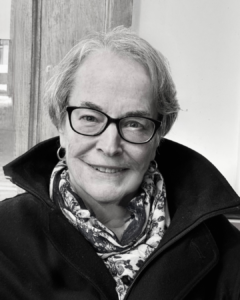
When Elizabeth St. Clair first heard the words "borderline personality disorder," they were delivered in one of the most difficult moments of her life.
Her daughter, then 17, had made a serious suicide attempt and was hospitalized. After an evaluation, a physician informed Elizabeth that her daughter had BPD and then offered a brief, discouraging response: "Good luck with that."
At the time, Elizabeth knew very little about borderline personality disorder. Faced with uncertainty and fear, she did what many parents do, she started searching for answers. She ordered every book she could find and immersed herself in learning about the diagnosis.
That search eventually led her to what was then the National Education Alliance for Borderline Personality Disorder (NEABPD), now BPD Alliance.
"I stumbled across a reference to NEABPD and saw that there was a class," Elizabeth recalls. Living in New York City, she was fortunate to find an in-person Family Connections® course nearby. Although the program looked very different in those early years, the experience planted a seed.
Years later, she returned to Family Connections® and discovered how much the program had evolved. This time, the course was led by both a clinician and a family member. The experience transformed her understanding of BPD and introduced her to the power of Dialectical Behavior Therapy (DBT) skills.
"The class just changed my life," she says.
Through Family Connections®, Elizabeth learned skills that helped her support her daughter while also caring for herself. She found hope in evidence-based approaches and witnessed firsthand how DBT could improve relationships and reduce suffering.
As her confidence grew, so did her involvement with the organization. Elizabeth became a Family Connections leader, attended leader training multiple times, facilitated both Family Connections and Managing Suicidality and Trauma Recovery (MSTR), coached other leaders, and eventually joined the BPD Alliance Board of Directors.
Yet when asked about receiving the Compassion pillar of BPD Alliance's CARE Award, Elizabeth is quick to point out that compassion was not always something that came naturally to her.
"I used to be a really judgmental person," she says. "I thought that was part of being a smart person, you make judgments."
The skills she learned through BPD Alliance helped her recognize how limiting and painful that mindset could be. Instead of reacting with judgment, she began practicing curiosity, openness, and understanding.
"When I started to feel a judgment, I'd stop and ask myself, 'What's happening here? What am I reacting to?'"
Over time, she learned to replace judgment with compassion.
"What is this person going through? What has led them to this moment?" she asks herself now. "How do I use the assumption that they're doing the best they can?"
For Elizabeth, compassion isn't a personality trait that some people possess and others don't. It's a practice that requires intention and continual effort.
That same spirit of compassion is what she sees reflected throughout BPD Alliance programs.
"Being nonjudgmental is such an explicit value of BPD Alliance," she says. "I think that really helps people feel safe and enables them to connect and ease some of their burden."
She has watched Family Connections® participants support one another through some of the most challenging moments of their lives. Parents who arrive feeling isolated quickly discover they are not alone. They find a community that understands their experiences without judgment and offers encouragement grounded in both compassion and evidence-based skills.
Today, Elizabeth's daughter is doing well and building a future of her own. The journey has not been easy, and Elizabeth acknowledges that the impact of those difficult years never fully disappears.
For parents who are just beginning their own journey after a BPD diagnosis, her advice is simple:
"Lean into it."
She encourages families to accept the diagnosis, seek support, and learn as much as they can.
"There's a ton of support. There are so many resources and materials to help on the journey," she says. "Take Family Connections®. Meet your people. Start learning."
Elizabeth's story is a powerful reminder that compassion can change lives, not only for those living with BPD, but also for the family members who love and support them. Through compassion, understanding, and connection, healing becomes possible.
And through leaders like Elizabeth, that compassion continues to ripple outward, helping other families find hope when they need it most.
4 Comments
Submit a Comment
You must be logged in to post a comment.
Hi. I’m wondering how do I find a support group in my city. Is there an online support group? My son was recently diagnosed with BPD and refusing DBT. I’m not even sure if his psychiatrist has let him know of his diagnosis. How does everyone navigate the same or a similar issue?
if you have not jointed the BPD alliance Facebook group, I believe looking there for people in your area is a great way to find or start a group.
As for the diagnosis and refusing DBT. I find that radical acceptance about my child’s choices and focusing on my DBT skills instead was really important. I also found that the diagnosis was not “important” to using these skills. I didn’t want to spend my time arguing and trying to convince my child of what they had when the skills work with them regardless of agreeing about the terms used. We settled on everyone gets emotionally dysregulated, so these skills help everyone.
I hope this helps.
Ciao. Sono mamma di una donna col disturbo. Purtroppo non è seguita da un esperto in DBT. Vorrei chiederti di aiutarmi ad usare le skills , ossia se ho capito bene tu ti avvali della DBT per querllo che è possibile come genitore. MI puoi dire cosa fai all’atto pratico? Hai un testo di riferimento tra i tanti che esistono? Ti ringrazio infinitamente perchè mia figlia è ingestibile nei rapporti con me. A livello cognitivo ha le sue idee che come sappiano nel disturbo sono quelle che sono, inoltre mi accusa da anni di averla partorita(è nata prima che ci sposassimo) l, non essere stata sensibile alla sua ipersensibilità da bambina,(questo dopo aver letto il libro della psicologa Aron sulla teoria delle persone altamente sensibili, in cui si è completamente identificata, di essere la causa se il partner da cui ha avuto un bimbo la ha lasciata e soprattutto mi accusa di non averla aiutata a farlo tornare da lei. Questo è una parte che mi trovo a gestire.Purtroppo è piena di rabbia, aggressiva a priori, ha messo in atto autolesionismo (non quello tipico delle ragazzine che si tagliano), ma sbatte la testa addosso ai muri, è stata violent con noi genitori, ha tentato ….come gesto dimostrativo, è sempre bisognossa di consigli che poi non accetta , Se puoi darmi un sufggerimento… GRAZIE
Following. I’m looking for a support group in my city too.