

Meet the Researcher: Exploring Personal Growth in Siblings of People With Personality Disorders
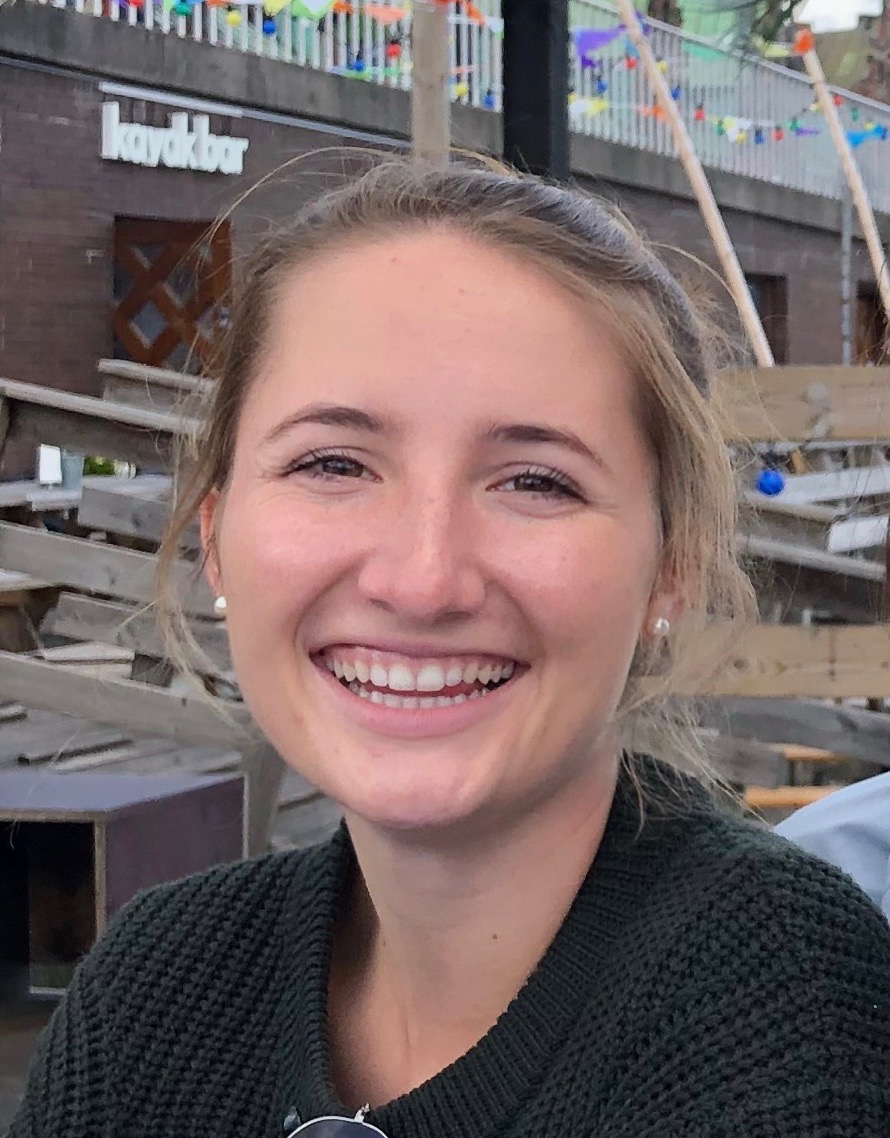
When we talk about borderline personality disorder (BPD), we often focus on the experiences of people with the diagnosis, their parents, or their romantic partners. But what about their siblings?
That’s a question Tess Gecha, a clinical psychology graduate student at the University of Houston, hopes to explore through her dissertation research.
Working under Dr. Carla Sharp in the university’s Developmental Psychopathology Lab, Tess studies personality disorders and their impact on families. Her clinical work includes assessing adolescents with complex mental health concerns, including those who may be showing signs of an emerging personality disorder. She also has experience providing therapy in private practice and community mental health settings, including working with mothers who have experienced domestic violence.
I sat down with Tess to learn more about the person behind the research, what she hopes to discover, and how siblings of people with personality disorders can get involved.
Xannie (BPD Alliance Communications Specialist): Before we get into your research, tell us a little about yourself outside of work. What do you enjoy doing?
Tess: I really like playing pickleball and rollerblading. I’m also trying to pick up running, and I enjoy walking around the parks in Houston.
It’s a hard question to answer because, unfortunately, as a graduate student, I feel like school ends up taking over my life, and I really don’t want it to!
But I also love spending time with my boyfriend, my sister, my family, and my friends. I enjoy trying new foods and going to restaurants. That sort of stuff.
Xannie: What first sparked your interest in researching personality disorders?
Tess: After undergrad, I knew I wanted to explore more complex psychopathology (mental health conditions and their symptoms).
My previous research experience during undergrad was doing parenting interventions, which I really enjoyed, but I wanted to explore more serious psychiatric disorders.
I also had an interest in trauma, so I was initially looking for labs that studied PTSD, but also disorders where trauma is common, which led me to BPD.
I ended up doing my post-baccalaureate research with Dr. Mary Zanarini at McLean Hospital.
I really enjoyed working with participants who have BPD and realizing just how stigmatized a disorder it is. I saw that research could be a way I could help support these individuals.
That led me to Dr. Carla Sharp’s lab, which focuses on emerging personality disorders in adolescence but also incorporates caregiving interventions, something I already had experience with through my undergraduate research.
Within her lab, I became really interested in the impact of personality disorders on different family members.
First, I explored that with caregivers who have BPD, trying to understand how BPD affects parenting, which inevitably impacts their children. Now, for my dissertation, I’m looking at the experiences of siblings of people with personality disorders.
Xannie: Why did you decide to focus specifically on siblings?
Tess: As I read through different studies and literature, there really wasn’t much on the experiences of individuals who have a sibling with personality disorder. I could only find about five studies, and all of them were qualitative (research that explores people’s experiences rather than focusing primarily on numerical data).
There’s a really big need for more research.
I was also looking at the experiences of siblings of people with schizophrenia because there’s some overlap between the disorders, and there’s a much more robust body of literature.
Within that research, I was finding a lot about the negative impact, but I was also finding some things about the growth that could come from having a sibling with a psychiatric disorder.
That was the big gap in research - there are no studies that look at whether siblings of people with personality disorder can experience growth.
My study focuses on the experiences of individuals who have a sibling with a personality disorder, but we’re particularly interested in the personal growth that could come from it.
Xannie: You mentioned that previous research on siblings has been qualitative. Does your study also include quantitative research (research that uses numerical data to identify patterns and relationships)?
Tess: Yes, we’re doing both.
Xannie: What are you hoping to discover through your research?
Tess: It would be great to see if siblings of people with BPD, or any personality disorder, display high levels of growth.
We’re measuring that using a well-validated measure of personal growth following traumatic events.
We’re trying to be careful about not implying that having a sibling with a personality disorder is traumatic because it’s not necessarily traumatic to have a sibling with a personality disorder, but we’re limited in how many validated measures we have. So we’re using the Posttraumatic Growth Inventory.
We hope that there are going to be high levels of growth.
It goes back to posttraumatic growth theory (the idea that people can experience positive psychological changes as a result of struggling with highly challenging life experiences) and the life crisis and personal growth model.
The idea is that, yes, with hard, difficult times or transitions in your life, there can be negative consequences. But those experiences can also come with growth.
Xannie: What are some areas you think researchers should be focusing on in the BPD and personality disorder field?
Tess: I’m biased, but I think it’s important to engage in qualitative research.
I really think it gets at the rich details that you can’t always get through quantitative data. Getting at the lived experiences to really understand what individuals are going through is important.
I also think incorporating individuals with lived experience is really valuable, and I’m glad to see that this has been a trend in personality disorder research.
People with lived experience have so much insight, as well as connections to communities where people might be excited to participate in research.
That’s something I’ve come across myself, trying to reach certain communities and struggling to convey that my hope is that this research will ultimately help them.
Thinking about siblings, the hope is that we can figure out better ways to support them and help them move toward that growth.
Xannie: We frequently share opportunities to participate in research. Why do you think people should consider participating?
Tess: I think there are many reasons. It can benefit both themselves and other people.
First, research helps others who are in similar positions and have similar experiences.
For example, with siblings of people who have personality disorders, we hope we can use the data to gain insight into what these individuals are struggling with and what their areas of strength are.
How can we use these things to better support other individuals who have a sibling with a personality disorder?
That’s number one.
Number two, I think participating in a study can be beneficial for individuals themselves, depending on how the study is run.
There can be a lot of insight into your own experiences.
In daily life, people aren't asking each other pointed questions like “Have you experienced a change in your outlook because of your experience having a sibling with a personality disorder?”
I ask questions like that in my study, which can be a nice reflective process that can shed some insight into individuals' experiences. It would be phenomenal to hear that my study could help with some sort of healing.
It can be really confusing sometimes to try to understand your experience having a loved one with a personality disorder. It can be a lot, and it can be a lot for everyone.
I think being able to sit down, fill out a survey, and think things through can hopefully bring some healing and insight into what’s going on.
Xannie: You’re currently recruiting participants for your study. Is there anything else you’d like potential participants to know?
Tess: It’s an understudied area of research, and we really do appreciate siblings’ time and efforts in helping us see this project through.
I think participating can also prompt a certain level of insight into your own experiences and struggles that you don’t always have the time and space to figure out.
This is really a time to do that, which you might not otherwise get.
Interested in Participating?
Tess and the University of Houston Developmental Psychopathology Lab are currently recruiting participants for an online study exploring personal growth in siblings of people with personality disorders.
You may be eligible if you:
- Are 18 years of age or older
- Are fluent in English
- Have a sibling with a personality disorder
Participation involves completing one online questionnaire, which takes approximately 30–40 minutes.
Participants also have the option to enter a raffle to win one of 100 $20 Amazon gift cards. The gift cards can be used in countries outside the United States.
Click here to complete a brief eligibility screening survey.
For questions about the study, contact dplsiblingstudy@gmail.com.
This study has been reviewed by the University of Houston Institutional Review Board.
By participating, you can contribute to an understudied area of research and help researchers better understand the experiences, challenges, and strengths of siblings of people with personality disorders.